



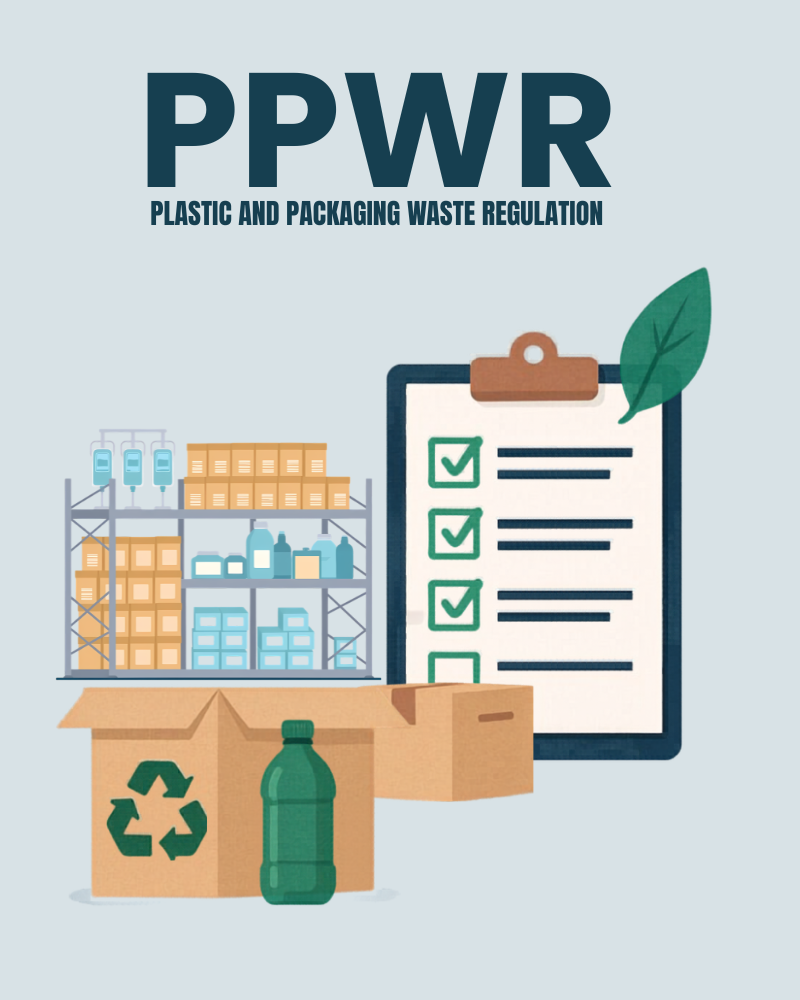
Across Europe, the advancement of the Packaging and Packaging Waste Regulation (PPWR) is doing more than redefining sustainability standards—it is forcing brands to make a strategic choice: comply, or leverage this new regulatory landscape as a source of differentiation.
Far from being just another environmental regulation, the PPWR is becoming a competitive filter—separating companies that react from those that anticipate.
A Change That Goes Beyond Regulation
The PPWR introduces clear requirements: waste reduction, improved recyclability, reuse targets, and restrictions on certain packaging formats. But its true impact lies not in the regulation itself, but in what it triggers.
Companies operating—or planning to operate—in the European market are being pushed to rethink packaging from the ground up. This means revisiting materials, production processes, and in many cases, the entire product value proposition.
It’s no longer just about making packaging “recyclable.”
It’s about making it viable within a system that demands traceability, efficiency, and environmental consistency.
Packaging as a Brand Language
In this new context, packaging is no longer just functional—it becomes a message in itself.
European consumers—and increasingly, global markets—are raising their expectations. They are looking for transparency, but also for coherence: packaging that aligns with a brand’s sustainability narrative.
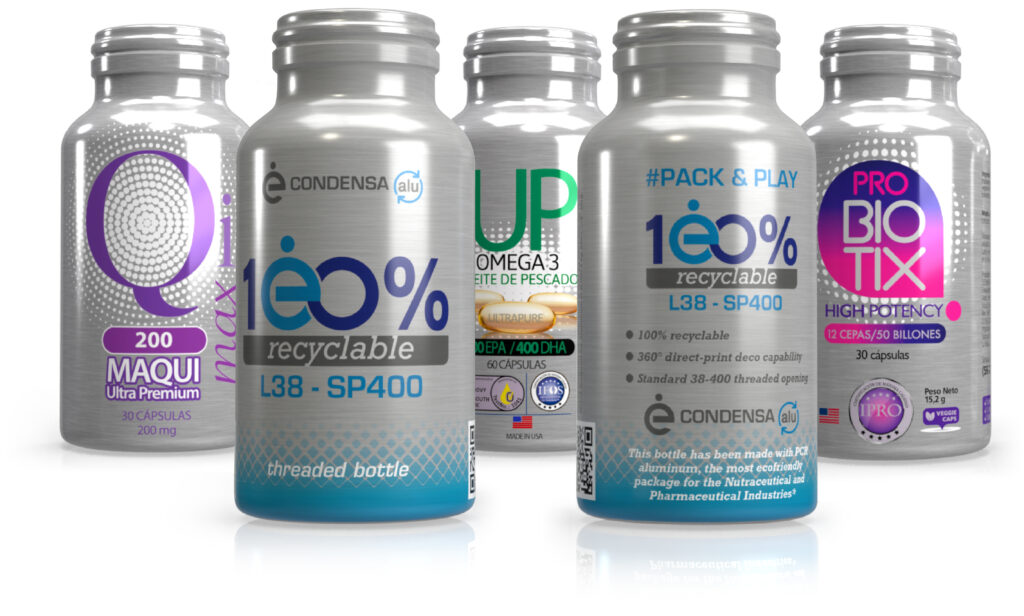
This is where materials like aluminum begin to play a strategic role. Its near-infinite recyclability and ability to retain properties without degradation position it as a strong alternative to more questioned solutions.
But choosing the right material is only part of the equation.
Design, dosing, component reduction, and ease of recycling are all becoming critical factors.
Staying Ahead of the Curve: The New Competitive Edge
Waiting for the PPWR to be fully enforced can be a risky strategy. Companies already adapting their packaging are not only reducing the impact of future restrictions—they are gaining time to optimize costs, processes, and brand perception.
More importantly, early action creates room to experiment.
Testing new formats, validating materials, adjusting production lines—all with flexibility, before regulation forces accelerated and often more expensive changes
From Pressure to Opportunity
Regulation has historically been seen as a burden. In the case of the PPWR, however, the scenario is different.
Companies that integrate these changes intelligently can turn obligation into a tangible competitive advantage:
- Stronger alignment with demanding consumers
- Better positioning in international markets
- Long-term resource optimization
- Innovation in design and functionality
Ultimately, the PPWR is not just redefining packaging in Europe. It is redefining how brands think about packaging.
And in this transition, those who understand that the shift is not only technical—but strategic—will be the ones leading the next stage of the industry.